What is a Current Transducer and How Does It Work?
In today's rapidly advancing technology landscape, the importance of a current transducer cannot be overlooked. These devices are crucial for converting electrical currents into manageable signals for various applications. According to a recent report from MarketsandMarkets, the global current transducer market is projected to reach $1.2 billion by 2025, highlighting its growing significance across industries.
Renowned industry expert, Dr. Emily Chen, emphasizes this point, stating, "Current transducers are the backbone of modern electrical systems." This statement underscores their vital role in ensuring efficiency and safety in electrical measurements. However, despite their critical function, many companies still face challenges in implementing these devices effectively.
Some users struggle with installation or calibration, which can lead to operational inefficiencies. As the industry progresses, understanding the working principles of current transducers becomes essential. It is imperative to reflect on best practices and improve overall usage. Addressing these concerns will enhance the reliability and effectiveness of current transducer technology in various applications.
What is a Current Transducer?
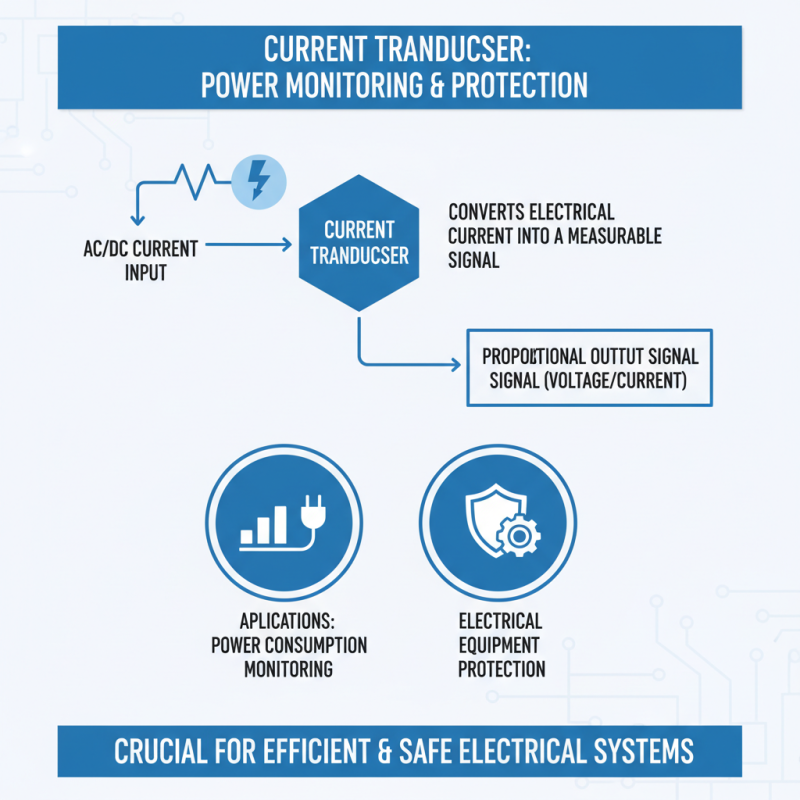
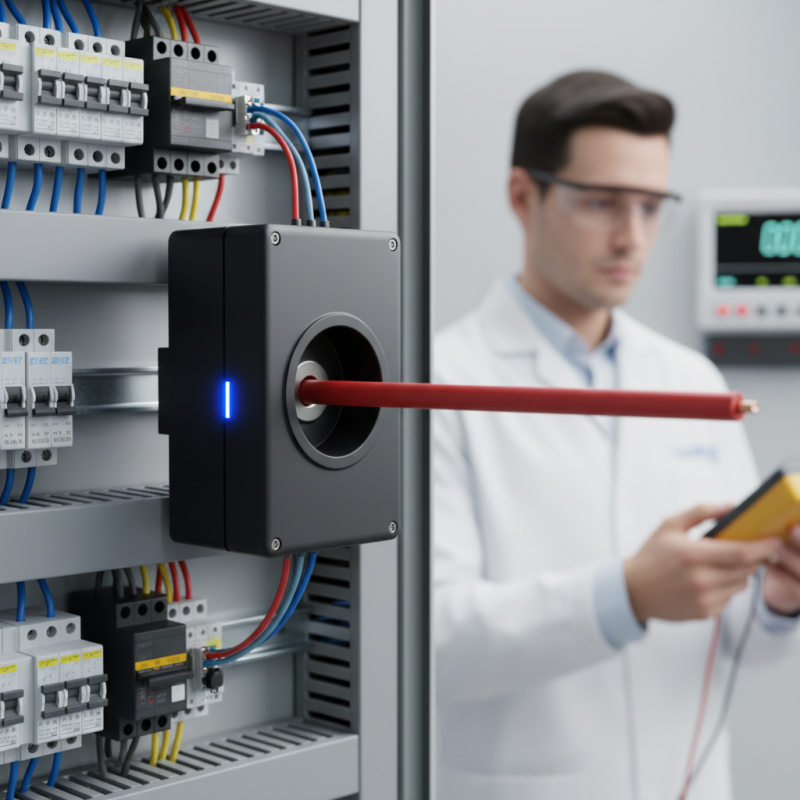
A current transducer is a device designed to measure electric current. It converts electrical current into a proportional output signal. This output is often in the form of voltage or current, which can be easily analyzed. Current transducers are crucial in many applications, such as monitoring power consumption and protecting electrical equipment.
In essence, these devices utilize magnetic fields or resistive elements. They make use of the magnetic effect of current flow. For instance, a Hall effect transducer senses the magnetic field produced by current. It is often preferred for its linear response and ease of use. Measuring current accurately can be complex. Misreading can lead to significant issues, such as equipment failure or incorrect data interpretation.
Moreover, the installation process may also present challenges. Misalignment can result in incorrect readings. Understanding how to calibrate a current transducer properly is essential. Many users overlook this aspect, leading to errors in measurements. Adjustments and real-time monitoring are necessary for precise outcomes. Regular maintenance is also crucial to ensure accurate functioning over time.
The Principle of Operation of Current Transducers
Current transducers are essential devices for measuring electric current. They convert electrical current into a proportional output signal, which can be monitored and analyzed. The operation of current transducers relies on electromagnetic principles. These devices typically consist of a conductor through which the current flows and a sensing mechanism that detects the magnetic field generated.
One common type of current transducer uses Hall effect technology. When current flows through the conductor, it generates a magnetic field. The Hall effect sensor detects this field and creates a voltage output proportional to the current. According to a recent industry report, the global current sensor market is projected to reach $2 billion by 2025. This growth reflects the increasing demand for precision in current measurements across various sectors, such as automotive and renewable energy.
Despite their advantages, current transducers have limitations. For instance, temperature changes can affect their accuracy. Additionally, some transducers are sensitive to external magnetic interference, which can skew measurements. Continuous research is vital to innovate better materials and designs. Improving reliability and accuracy will help meet the evolving demands of industries worldwide.
What is a Current Transducer and How Does It Work?
| Feature |
Description |
Applications |
| Type |
Hall Effect, Rogowski Coil, Shunt Resistor |
Power Metering, Motor Control |
| Operating Principle |
Detects current via magnetic fields or resistance changes |
Renewable Energy Systems, Industrial Automation |
| Output Signal |
Analog Voltage, Current, or Digital Signal |
Building Management Systems, HVAC |
| Measurement Range |
From Milliamps (mA) to Thousands of Amperes (A) |
Electric Vehicles, Data Centers |
| Accuracy |
Typically ±1% to ±0.5% |
Industrial Equipment, Test Equipment |
Types of Current Transducers and Their Applications
Current transducers are essential in many industries. They convert electrical current into a measurable signal. Several types of current transducers exist, each serving unique purposes.
Hall effect transducers are popular for their accuracy. They are commonly used in automotive applications. These sensors detect current flow without direct contact. They require careful calibration to ensure precision.
Another type is the shunt resistor, often found in power systems. Shunt resistors are straightforward but have limitations. They can generate heat, affecting readings over time. Clamp-on transducers offer easy installation. However, they are generally less accurate. Each type has its pros and cons. Choosing the right one requires understanding the specific application.
Current Transducer Types and Their Applications
Key Advantages of Using Current Transducers
Current transducers play a vital role in electrical monitoring. They measure the current flowing through a conductor without needing to make direct contact. This non-invasive approach offers significant benefits for many applications.
One of the main advantages of using current transducers is safety. Since they can detect current without direct connection, the risk of electric shock is minimized. This makes them ideal for industrial settings, where high voltages are often present. Additionally, the measurement accuracy of modern current transducers is impressive. They can provide real-time data, enabling quick decision-making.
Another key benefit is their versatility. Current transducers can be used in various applications, from power distribution systems to renewable energy installations. They are often compact and easily integrated into existing systems. However, some users may find the initial setup complex. A learning curve exists, especially for beginners. It's essential to consider specific needs before choosing the right type.
Common Challenges and Limitations of Current Transducers
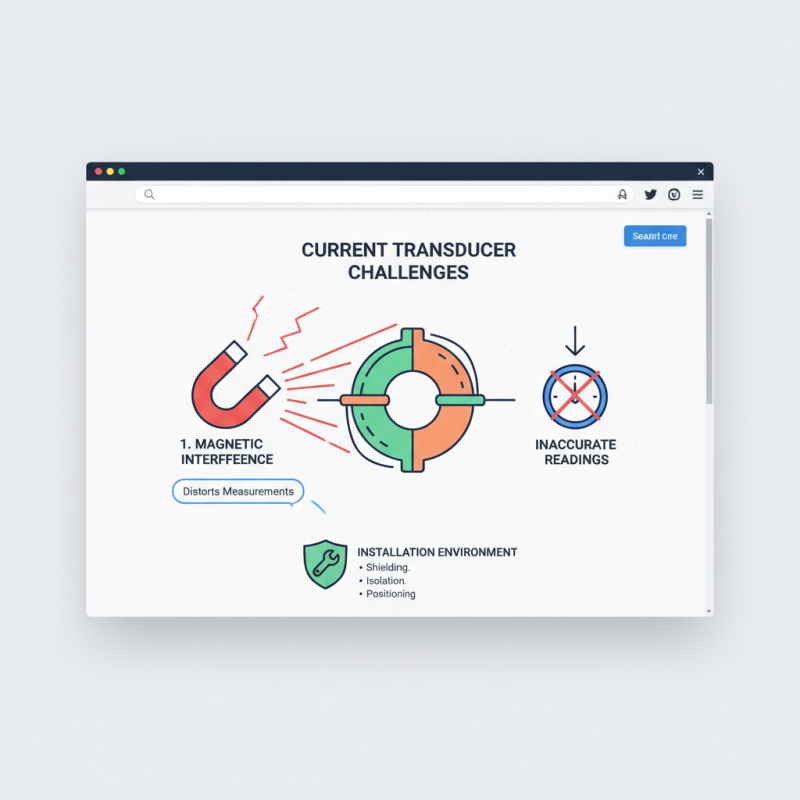
Current transducers play a crucial role in measuring electrical current. However, they come with challenges that can affect their performance. One significant issue is sensitivity to magnetic interference. Magnetic fields can distort measurements, leading to inaccurate readings. It is vital to consider the installation environment of these devices.
Another challenge is temperature dependency. Current transducers often change their characteristics with temperature fluctuations. This can result in altered measurements, particularly in extreme conditions. Users must regularly calibrate their devices to ensure accuracy.
Lastly, integration with existing systems can be complex. Ensuring compatibility with various interfaces may require additional components. This can introduce errors during installation. Overall, while current transducers are valuable tools, understanding their limitations is essential for effective usage.
 X
X