Top Hall Effect DC Current Sensor Applications and Benefits Explained?
The Hall Effect DC current sensor plays a vital role in modern electrical applications. With the growing demand for accurate current measurement, industries are increasingly adopting this technology. According to a recent market analysis by Research and Markets, the Hall Effect sensor market is expected to grow by over 8% annually through 2025. This growth highlights its significance in various sectors, from automotive to renewable energy.
Dr. Emily Carter, a leading expert in sensor technology, emphasizes the importance of these sensors: "Hall Effect DC current sensors are crucial for ensuring operational efficiency in electrical systems." This accuracy leads to better performance and more reliable equipment. However, the integration of these sensors is not without challenges. Issues such as sensitivity to magnetic interference and temperature fluctuations can affect their precision in some environments.
Despite these challenges, the advantages outweigh the drawbacks. Hall Effect DC current sensors provide non-contact measurements and can handle high currents. They are essential for applications requiring real-time data. As the market evolves, continued improvements in sensor design will likely overcome existing limitations, enhancing their reliability and application scope.
Top Hall Effect DC Current Sensor Overview and Principles of Operation
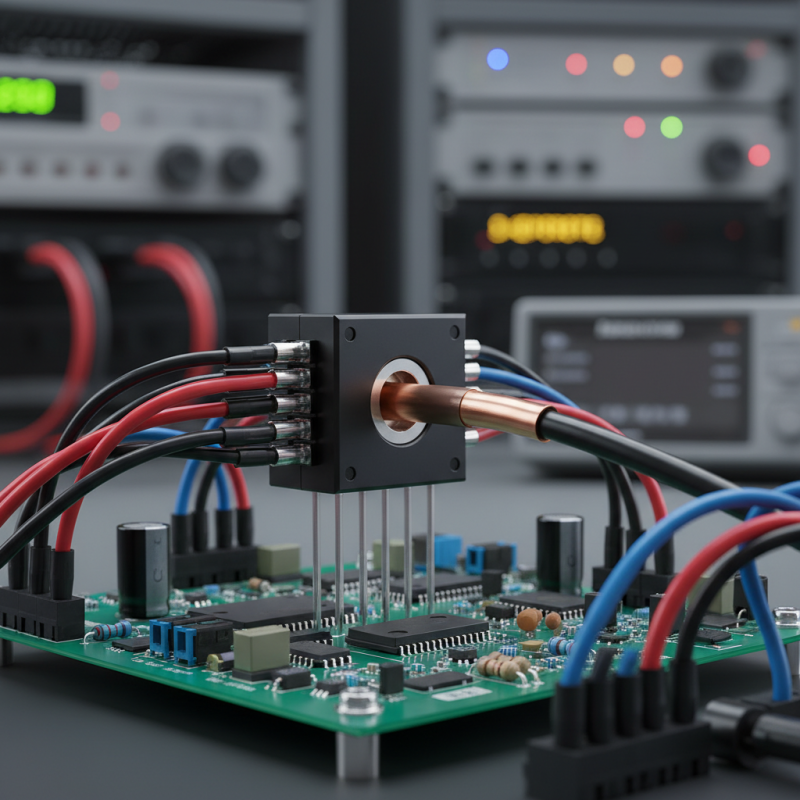
Hall Effect DC current sensors have become essential in modern electronics. These sensors operate based on the Hall effect principle, which detects the presence of a magnetic field. When current flows through a conductor, it generates a magnetic field. The Hall sensor detects this field and converts it into a proportional voltage. This voltage can then be processed to determine the current flow accurately.
Industries that utilize Hall Effect sensors often report enhanced efficiency. For instance, a recent study shows that precision monitoring can improve operational efficiency by 30% in certain applications. This is crucial in electric vehicles and renewable energy systems. Hall Effect sensors are known for their robustness and longevity, but they must be calibrated correctly to maintain accuracy over time.
Some challenges remain. Environmental factors can affect sensor performance. Additionally, mounting errors can lead to inaccuracies. Understanding these limitations is vital. Regular maintenance and recalibration can mitigate these issues. Balancing performance and reliability continues to be a focus within the industry.
Key Applications of Hall Effect DC Current Sensors in Industry
Hall Effect DC current sensors are becoming indispensable in various industries due to their precision and reliability. These sensors provide real-time measurements of current without direct electrical contact. This feature is crucial in applications such as electric vehicles and renewable energy systems, which demand high accuracy and efficiency. A recent industry report indicates that the demand for Hall Effect sensors is projected to grow by 15% annually.
In industrial automation, Hall Effect sensors help in monitoring motors and generators. They detect current changes instantly, enhancing system responsiveness. This ensures optimal performance, reducing energy waste. Similarly, in power supply applications, these sensors monitor battery systems, providing vital data for energy management. Many companies are shifting towards this technology for cleaner and greener operations.
Tips: Consider exploring the environmental impact of sensor usage. While Hall Effect sensors are efficient, their manufacturing process can still produce waste. Opting for suppliers who prioritize sustainability may balance performance and responsibility. Additionally, ensure proper calibration regularly, as the aging of sensors can lead to inaccurate readings over time. This simple step can save costs and enhance safety in high-stakes environments.
Benefits of Using Hall Effect Sensors Over Traditional Current Sensors
Hall Effect sensors have gained momentum in various applications due to their distinct advantages over traditional current sensors. These sensors can provide accurate, real-time measurements of direct current without direct contact with conductive components. Reports suggest that Hall Effect sensors can reduce measurement errors by up to 20% compared to shunt resistors, especially under fluctuating conditions.
One key benefit of Hall Effect sensors is their ability to withstand higher voltages and currents. They are less prone to overheating. This makes them suitable for heavy machinery and automotive applications. A study shows that Hall Effect sensors can operate effectively in environments with temperatures ranging from -40 to 150 degrees Celsius. However, the cost tends to be higher. This raises questions about affordability for small-scale applications.
Moreover, Hall Effect sensors contribute to energy efficiency. Their non-invasive design ensures minimal power loss. Research indicates they can improve the overall system efficiency by 10% in energy management systems. Yet, this technology is not without its challenges. The complexity of implementation may be daunting for some industries. Organizations need to weigh these factors carefully. Experts recommend thorough testing to adapt these sensors optimally.
Top Hall Effect DC Current Sensor Applications and Benefits
The bar chart above illustrates the percentage of advantages of Hall Effect DC Current Sensors across various application sectors including Industrial, Automotive, Renewable Energy, Consumer Electronics, and Telecommunications. Hall Effect Sensors are known for their accuracy and effectiveness in measuring DC current, making them a preferred choice over traditional methods.
Market Trends and Growth Opportunities for Hall Effect DC Current Sensors
The Hall Effect DC current sensor market is experiencing notable growth. According to a recent industry report, the market is projected to reach approximately $600 million by 2027, expanding at a CAGR of 6.5%. This growth is primarily driven by the increasing demand for efficient and accurate current sensing solutions in various sectors including automotive and industrial applications.
Key applications include electric vehicles and renewable energy systems. In electric vehicles, Hall Effect sensors provide real-time current measurement, enhancing performance and safety. The report highlights that around 40% of current sensors used in EV applications utilize Hall Effect technology, emphasizing its significance.
Moreover, industries are shifting towards more compact and reliable sensing devices amid rising power management needs.
However, the transition to Hall Effect sensors is not without challenges. Some manufacturers express concerns over the sensor's sensitivity to external magnetic fields. This imperfection can impact measurement accuracy in certain environments. Despite these issues, the increasing robustness and miniaturization of these sensors create valuable growth opportunities in emerging markets. The technology's versatility makes it a suitable choice for multiple applications, paving the way for innovative solutions and developments.
Performance Metrics: Accuracy, Sensitivity, and Temperature Coefficients
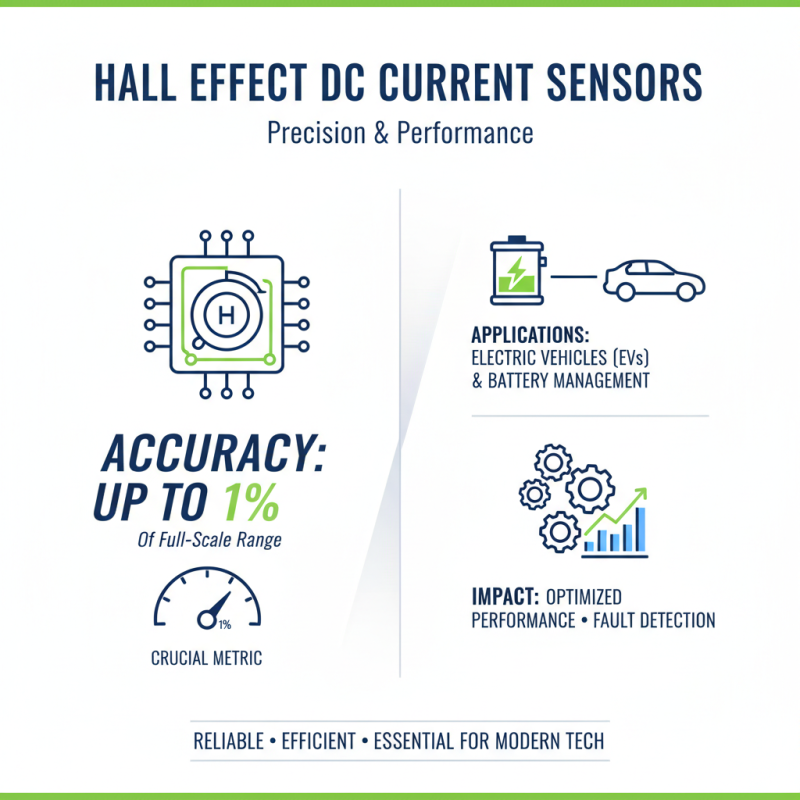
Hall effect DC current sensors are known for their unique advantages in various applications. Their performance metrics, notably accuracy and sensitivity, play crucial roles in their effectiveness. Accuracy is often expressed as a percentage of the full-scale range. Industry reports indicate that high-quality Hall effect sensors can achieve an accuracy of up to 1%. This level of precision is essential in applications like battery management and electric vehicles, where minor discrepancies can lead to significant performance issues.
Sensitivity is another critical parameter. It measures the sensor's ability to detect small variations in current. Sensors typically exhibit sensitivity in the range of 50 to 200 mV/A. A higher sensitivity allows for better monitoring of electrical systems. In some cases, however, excessive sensitivity can lead to false readings due to noise. This is an area that requires careful calibration and consideration.
Temperature coefficients are essential for ensuring reliable performance across diverse environments. The temperature coefficient indicates how a sensor's output changes with temperature fluctuations. Ideally, this value should be as low as possible. Reports suggest that many sensors have temperature coefficients around 100 ppm/°C. This characteristic is vital in high-temperature applications, where sensor drift can cause inaccuracies. Consistency in performance is paramount, and temperature-related variances can sometimes lead to unexpected outcomes.
 X
X